Showing posts with label Holden. Show all posts

Tuesday, August 23, 2011

Holden Torana TT36

The Holden Torana is a car which was produced by General Motors–Holden's (GM-H), the Australian subsidiary of General Motors (GM) from 1967 to 1980. The name comes from an Aboriginal word meaning "to fly". The first Torana (HB series) appeared in 1967 and was a four cylinder compact vehicle that had its origins in the British Vauxhall Vivas of the mid 1960s. Whilst 1969-73 (LC and LJ) models included more popular, longer wheel base six cylinder versions; and 1974-77 (LH and LX) eight cylinder versions the four-cylinder versions continued for the entire production life of the Torana and were known as the Holden Sunbird from 1976.


In 2004, Holden released a sporty five-door concept car called the Torana TT36 (TT = Twin Turbo; 36 = 3.6 litre V6). The model was said to debut a new platform for General Motors and previews the look of the 2006 VE Commodore. In terms of size, it was marginally bigger than the BMW 3 Series on the outside, though considerably roomier inside with BMW 5 Series rivaling interior space. The TT36 was painted in Magenta and has a clear roof. The prototype visited the National Motor Museum at Birdwood in the Adelaide Hills in early 2008.


Holden Torana TT36 Show Up


Exotic Holden Torana TT36 In Pink Color


Holden Torana TT36 Shows Detail


Holden Torana TT36 Engine Detail


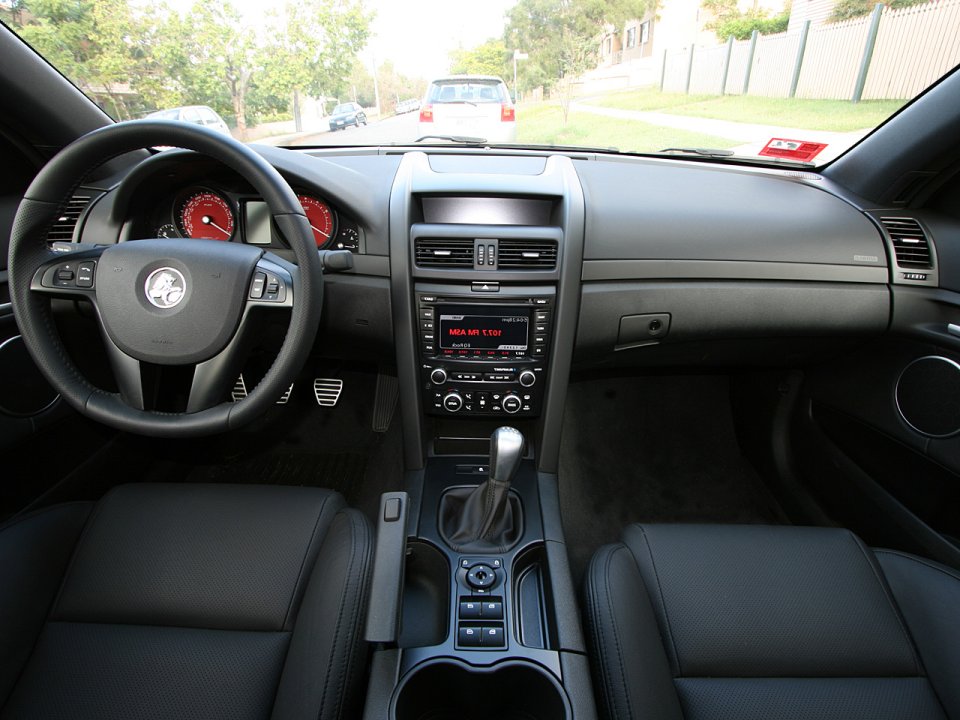
Holden Torana TT36 Exotic Interior


Holden Torana TT36 Audio Stereo


Holden Torana TT36 Speedometer


Holden Torana TT36 Excellent Interior


Holden Torana TT36 Hatchback


Tuesday, July 26, 2011

2009 Holden Colorado


GM Holden takes the cover of his next release, the new light commercial vehicle, the Holden Colorado.


This new powerful light truck brings high performance and capacity, all the cars, like the interior comfort and value for money that Holden is renowned for.

The three tons of towing capacity braked Turbo Diesel 4x4 variants adds a strong appeal Holden Colorado.


Holden Colorado will bring an extensive LCV range to the market, offering consumers a wide range of body styles, powertrains and specifications to suit all work and recreational applications, catering for both fleet and private customers .

With muscular wheel arches, powerful front and side profile, aggressive exterior styling reflects its credentials Holden Colorado laborious.

2010 Holden Cruze Review


The all-new Holden Cruze debuts in Australia at the 2009 Melbourne International Motor Show, signaling the company last participant in the competitive small car segment. Holden Cruze is the first of General Motors' new wave of global products and enter the small car segment in Australia equipped with a road presence on strike, a sophisticated interior comfort and a high level of security. Powered by a 1.8-liter 4 - ECOTEC-cylinder petrol or optional 2.0-liter turbocharged four-cylinder common rail diesel engine, Holden Cruze goes on sale in the second quarter of 2009.


GM Holden Chairman and Managing Director, Mark Reuss said Holden Cruze represents the commitment of the small car market and marked the beginning of a new era for the company.


"The market for small cars is the fastest growing segment in the Australian market and this is our response to this change," said Reuss. "Holden Cruze will have an important role in the future of Holden and presents a new generation car, a new design and a new way of thinking. It's a small world of the kind of car is the perfect blend of style and substance, all the basic type of high-end ".

1970 Holden Torana GTR-X Concept


Holden Torana GTR-X Concept has been designed for a period of LC Torana series, and was seriously considered for production in early 1970. GTR-X was a wedge-shaped body with a fiberglass tailgate access, prototypes and LC Torana GTR cars were XU-1 mechanical components.


The Holden Torana GTR-X concept looks like a sports car emblematic of the 1970s, as the Ferrari 308 GT4, Lotus Esprit and the Mazda RX-7. It weighed 1043 kg (2299 pounds) and has a top speed of 210 km / h (130 mph). The Torana GTR-X in production would have been the first Holden car factory to be equipped with four disc brakes on all four wheels.


When Holden released a promotional brochure in the GTR-X, he said - "His long, elegant hood is accentuated by a small wedge-shaped grid scan lines of the body in the rear tail light assembly the high Simplicity is the sign ... This is achieved by concealed headlights, a rake of glare ice, parking and behind the turn signals, and access to flush filling of gasoline and door handles. fenders take the front and rear body contour. To identify the vehicle, the GTR-X identification is contained within a band of black and orange fresh, parallel to the rocker panel. "


The Torana GTR-X was largely developed by Holden, design and well as brochures, photographs and promotional films were produced to show how serious they put the car into production, the company was finally unable to justify the high cost of engaging in production given the size of the Australian population in those days.

Monday, June 13, 2011

Holden Commodore

The Holden Commodore is an automobile manufactured since 1978 by the Holden subsidiary of General Motors (GM) in Australia, and, formerly, in New Zealand. In the mid-1970s, Holden established proposals to replace the long-serving Kingswood nameplate with a smaller, Opel-based model. Opel continued to provide the basis for future generations until the launch of the fourth generation in 2006, which deployed an Australian developed platform. Initially introduced as a single sedan body style, the range expanded in 1979 to include a station wagon, with utility and long-wheelbase Statesman/Caprice derivatives following in 1990. The foundations for a revived Monaro coupé, four-door Crewman utility, and all-wheel drive Adventra crossover were provided by the now discontinued third generation architecture. From 1984, Holden began branding the flagship Commodore model as Holden Calais; the Holden Berlina and Holden Ute followed in 1988 and 2000, respectively. These were known previously as the Commodore Berlina and Commodore utility. Rivalry has come predominantly from the Ford Falcon—also locally-built. Prior to the 1988 onwards second generation Commodore, the Holden was positioned a full class below the full-size Falcon. To a lesser degree, competition has also come from Toyota, and previously Mitsubishi Motors, with their mid-size cars. Between 1989 and 1997, Toyota retailed a Toyota Lexcen version of the second generation Commodore. With the introduction of generation three in 1997, Holden broadened the Commodore's export plans. Since the late-1990s, Commodores have been sent abroad as the Chevrolet Lumina and Chevrolet Omega, with Vauxhall VXR8 sales beginning in 2007. Versions have also been previously exported in the mid-1990s to Southeast Asia as the Opel Calais, and to North America between 2007 and 2009 as the Pontiac G8.

Introduced in October 1978, the Holden VB Commodore development covered a period with the effects of the 1973 oil crisis still being felt. Hence, when Holden decided to replace the successful full-size HZ Kingswood with a new model line, they designed the new car to be smaller and more fuel efficient. Originally, Holden looked at developing a new WA Kingswood, however, this project was later dismissed. With no replacement in development, Holden looked towards Opel for providing the foundations of the VB, basing it loosely on the four-cylinder Rekord E bodyshell with the front grafted on from the Opel Senator A. This change was necessitated to accommodate the larger Holden six- and eight-cylinder engines. Holden also adopted the name "Commodore" from Opel, which had been using the name since 1967. Opel went on to use Holden’s Rekord-Senator hybrid as a foundation for its new generation Commodore C, slotting in between the two donor models. The Holden VN Commodore of 1988 and subsequent second generation models took their bodywork from the larger Opel Senator B and new Opel Omega A. However, this time, the floor plan was widened and stretched; now matching the rival Ford Falcon for size. Continuing financial woes at Holden meant the wider VN body was underpinned by narrow, carry-over VL chassis components in a bid to save development costs. In the VN and succeeding models, the Commodore Berlina became known simply as the Berlina. The range expanded in 1990 to include a utility variant, given the model designation VG. This was built on a longer-wheelbase platform that it shared with the station wagon and luxury VQ Statesman limousine released earlier in the year. During this time, the rival Ford EA Falcon was plagued with initial quality issues which tarnished its reputation. Buyers embraced the VN Commodore, helping Holden to recover and post an operating profit of A$157.3 million for 1989. The team at Wheels magazine awarded the VN Car of the Year in 1988: the second Commodore model to receive this award.

With the VT Commodore of 1997, Holden looked again to Opel in Germany for a donor platform. The proposal was to take the Opel Omega B and broaden the vehicle’s width and mechanical setup for local conditions. In the early days, Holden considered adopting the Omega as is, save for the engines and transmissions, and even investigated reskinning the existing VR/VS architecture. Later on, the VT bodywork spawned a new generation of Statesman and Caprice limousines, and even went as far as resurrecting the iconic Monaro coupé from the 1960s and 1970s. Launched in 2006 after GM's 2003 abandonment of their last European rear-drive sedan, the Opel Omega, the VE is the first Commodore model designed entirely in Australia, as opposed to being based on an adapted Opel-sourced platform. Given this and high public expectations of quality, the budget in developing the car reportedly exceeded A$1 billion. Underpinned by the new GM Zeta platform, the VE features more sophisticated independent suspension all round and near-even 50:50 weight distribution, leading to improved handling. Engines and transmissions are largely carried over from the previous VZ model. However, a new six-speed GM 6L80-E automatic transmission was introduced for V8 variants, replacing the old four-speed automatic now relegated to base models. The design of this new model included innovative features to help minimise export costs, such as a symmetrical centre console that houses a flush-fitting hand brake lever to facilitate its conversion to left-hand drive. Internationally, the Commodore is again badge engineered as the Chevrolet Lumina and Chevrolet Omega, along with its new export market in the United States as the Pontiac G8 (discontinued as of 2010 along with the Pontiac brand).

Wednesday, June 1, 2011

Holden Monaro

The Holden Monaro is an automobile that was produced by GM Holden Ltd, an Australian subsidiary of General Motors, between 1968 and 1977 and between 2001 and 2005. Since 1968, three generations of the Monaro have been produced.Named after the Monaro region in New South Wales (although pronounced differently), the Monaro was introduced in July 1968 as a two-door pillarless hardtop coupe available in three models: the basic Monaro coupe, Monaro 'GTS' coupe and Monaro 'GTS 327' coupe. The GTS versions had "full instrumentation" which included a tachometer mounted on the centre console. This proved to be a bad location as the drivers knee would obstruct the view and it often rattled (Spotlight on Holden Monaro Page 6-7). The cars could be ordered with a choice of six cylinder engines of 161 cu in (2,640 cc) capacity (base only) or two versions of 186 cu in (3,050 cc) capacity (GTS with the uprated 186S only), or a 307 cu in (5,030 cc) capacity Chevrolet-sourced V8. The exclusive 'GTS 327' model was powered by the 250 bhp (186 kW) Chevrolet 327 cu in (5,360 cc) V8.HT series Monaros were assembled in South Africa from imported parts by General Motors South African (GMSA) at the Port Elizabeth assembly plant. Later the HG series Monaro was assembled and sold in South Africa badged as the Chevrolet SS. At this time GMSA had made a decision to market most of its products as Chevrolets. The Chevrolet SS had revised front styling unique to that model, incorporating four headlights and large turn indicators in the front edge of the fenders above the bumper. The Holden Monaro and Chevrolet SS models were both available with Holden 308 in3 (5.0L) and the Chevrolet 350 in3 (5.7 L) engines. South African sales totalled 1828 Monaros and 1182 SS models.


(FEAR) HOLDEN MONARO MOTORVATION 23 2009 BURNOUT

A completely new generation body design emerged with the HQ series in July 1971, including the new Monaro 'LS' (commonly believed to mean "Luxury Sports") model. There were no longer any six-cylinder versions of the Monaro GTS, just 253 or optional 308 V8s or the top level GTS350 coupe. The base model Monaro standard engine was enlarged to 173 cu in (2,830 cc) whilst the Monaro LS had a broad spectrum of engine options from a 202 cu in (3,310 cc) six to the 350 cu in (5,700 cc) V8. The new coupe design had a much larger rear window and a squarer rear quarter window; it was somehow seen as not as sporty looking compared to the earlier HK-HT-HG series, but is often now considered one of the best looking body designs to come from an Australian producer.A heavy facelift and some model rationalisation was applied to the HJ Monaro, which was released in October 1974. The 350 V8 engine option and the base Monaro coupe were both discontinued. The Monaro GTS continued to be available as a coupe or sedan with 253 cu in (4,150 cc) V8 power, or the optional 308 cu in (5,050 cc) V8 engine. The GTS sedan was now a model of its own - in HQ the GTS sedan was an optioned Kingswood. The Monaro LS coupe also continued within the range, but still with the 3.3 litre six-cylinder engine as its base power unit.New emissions regulations heralded the mildly facelifted HX Monaro GTS sedan, announced in July 1976. The HX was quite distinguishable, with liberal splashes of black paintouts contrasted against a range of bold body colours, and a choice of traditional chrome or body painted bumper bars.Holden found that it held more coupe bodyshells than could easily expended as "spare parts". The solution was the Holden Limited Edition, or 'LE', which was released on 27 September 1976. All were painted an exclusive metallic colour called LE Red. The LE was not badged or officially referred to as a Monaro. The LE was an amalgam of prestige and surplus parts (including an eight-track cartridge player well after cassette tapes were common), in effect a combination of Monaro GTS and Statesman Caprice components. The LE had a price tag to match: $11,500. The cars were built at the now-defunct Pagewood (Sydney) plant. Production totalled 580 vehicles. The distinctive honeycomb wheels fitted to the LE, which resembled those of the second generation Pontiac Firebird, were plastic hubcaps fitted to steel wheels.

Some 20 years had passed before the Monaro reappeared in the form of a Holden Commodore Coupé prototype, codenamed 'Matilda', that was shown at the Sydney Motor Show in 1998. Using the existing Holden Commodore, already based on the Opel Omega B modified chassis, Journalists quickly christened it the Monaro, encouraging Holden to build it. Public interest in the car grew and orders came flooding in. Eventually, Holden took the Matilda and redesigned it for production and by 2001, the V2 series Monaro was launched after General Motors spent A$60 million over a 22-month gestation period (although 12 to 18 were targeted). It was available in CV6 (production ceased in mid 2004) and CV8 models with a supercharged 3.8 L V6 and a 5.7 L Gen III V8, with a choice of a 6 speed manual or 4 speed automatic gearbox. A series 2 model debuted in early 2003 with a revised dashboard from the VY series Commodore, a new wheel design and some colours dropped and new ones added. The CV6 model was dropped after disappointing sales (reputedly 10 times as many Monaros were built as CV8s) when a Series 3 model appeared in 2004.Two special edition CV8-R Monaros were released, the first in a grey colour and the second in a more muted red. Each had special wheels and other distinguishing features.A HSV version (not called Monaro, but simply Coupe) in 'GTO' 255 kW (347 PS; 342 bhp) through 297 kW (404 PS; 398 bhp) and 'GTS' 300 kW (408 PS; 402 bhp) tuned by Callaway) versions debuted soon after Holden's release of the V2 Monaro editions. Due to high cost and low sales, the HSV 'GTS Coupe' was later dropped, but in its place in 2004 there appeared a 270 kW four-wheel drive version called 'Coupe4'.The third generation Monaro was exported to several overseas markets. It was sold as a (right hand drive) in South Africa as the Chevrolet Lumina. It was also sold, in left hand drive, in the Middle East as the Chevrolet Lumina Coupe, and in the United States as the Pontiac GTO, reviving another classic muscle car icon. However, at least one commentator has described it as a 'flop' because of its poor US sales. It was withdrawn from the US market in 2006, although a few were still on dealers' lots in 2007.The Holden Monaro convertible, codenamed 'Marilyn', was built as a fully operational one-off in 2004, and was never intended to reach production. Unusually for a Holden-badged concept, it was left hand drive.

Saturday, May 21, 2011

2011 Holden VE II Commodore Omega Review

VE and WM-Series II is the latest version of Australia's most popular sedans, wagons, utilities, luxury cars and a long wheelbase. New range has seen the refinement to the formula that made Holden Commodore of the best-selling car for 14 years, directly importing intelligent multimedia technologies, fuel economy, and the ability to use eco-friendly bioethanol.


VE Series II brings more multimedia features than ever by Commodore allnew infotainment system, which produces a fully integrated Bluetooth ®, USB and iPod whole range.

Known as the iQ-Holden, the system is controlled by an intelligent, easy to use touch screen mounted in the center console - the cornerstone of internal date on all models.

Presentation of increased music features plug-and-play and the ability to encode and store up to 15 CDs in an internal flash drive, the system also provides advanced satellite navigation on some models, there including the state of alert live traffic to help drivers avoid congestion delays.


Smart technology Commodore Series II extends powertrain line-up also provides a fuel savings on all models.

Holden thrifty 3.0-liter V6 now Sidi realize a savings of 9.1 liters of fuel per 100 km in the official test ADR81/02. The improvement of two percent adds up to 13 percent fuel economy in September last year, when the technology Direct Injection SI Engine was introduced in the region Commodore.

The 3.6-liter V6 Sidi used to provide models Commodore, average fuel economy gains of more than three percent of all models, while luxury and performance powered by Holden V8 Gen IV improvements averaging more than six percent.

In a major step towards creating a cleaner fuel Australian landscape, customers in the series II could also drive their cars on bio-ethanol which are known in many markets such as E85, a blend containing up to 85 percent ethanol and 15 percent gasoline.

Bio-ethanol is a renewable fuel that can be made from a variety of waste products from the production of wheat and sugar and even households. In Australia today the use of fuel reduces emissions of lifecycle CO2 by almost 40 percent compared to gasoline.

A first for an Australian car manufacturing, models of the Series II V6-powered 3.0-liter and 6.0 liter V8 Sidi flex-fuel capability, so they can run on bioethanol E10, without lead, Premium, or a combination of both.

LWB

The long-wheelbase luxury cars, Series II Holden is offering buyers in two well-defined flagship model Caprice.

The introduction of a major upgrade of WM Series II in September will mark the debut of the Holden Caprice V-Series.

Luxury Sport V Series designation corresponds to that of other premium Holden and identifies the top model.

Assembly is on the Caprice Series II, which shares the stretched silhouette, the 18-inch alloy wheels and a strong design character of its counterpart.

This move, Holden Statesman for a long time to stop the tag name.

VE and WM functionality Series II model line-up and new

Omega Sedan, Ute and Sportwagon - New standard features include:

Holden-color touch screen, the iQ is a single CD player, MP3 compatibility, USB, auxiliary input jack, a built-in iPod support, Enhanced Bluetooth ® (phone screen, touchscreen dialing, Bluetooth ® audio streaming

Dual-zone electronic climate control

3.0-liter direct injection V6 SIDI (again Ute)

6-speed automatic transmission to select an active (on the new Ute)

flex-fuel capability, so the vehicle can run on E10 bioethanol, unleaded premium or a combination


Berlina Sedan and Sport Wagon - New standard features include:

Holden-color touch screen, the iQ is a single CD player, MP3 compatibility, USB, auxiliary input jack, a built-in iPod support, Enhanced Bluetooth ® (phone screen, touchscreen dialing, Bluetooth ® audio streaming

Virtual CD changer, 1 GB of flash storage disk

Dual-zone electronic climate control

Flex-fuel capability, allowing the vehicle to run on bioethanol E10, unleaded premium or a combination

The new 17-inch wheels machined alloy (4)

New seats with cushions and fabric inserts Sportec

SV6 Ute and sedan and Sportwagon - New standard features include:

Holden-color touch screen, the iQ is a single CD player, MP3 compatibility, USB, auxiliary input jack, a built-in iPod support, Enhanced Bluetooth ® (phone screen, touchscreen dialing, Bluetooth ® audio streaming

Virtual CD changer, 1 GB flash memory storage

Dual-zone electronic climate control

New sport front seats

New sport-bright instrumentation

New 18-inch wheels machined aluminum (4)

The new interior color and finish

SS and the Sedan, Sport Wagon and Ute - New standard features include:

color touch screen system with iQ Holden-CD player, MP3 compatibility, USB input, auxiliary input jack, iPod support integrated Bluetooth ® improved (phone screen, touchscreen dialing, Bluetooth ® audio streaming

Virtual CD changer, 1 GB flash memory storage

Dual-zone electronic climate control

New sport of high clarity instrumentation

New 18-inch machined alloy wheels (4)

New interior color and cut

Flex-fuel capability, which allows the vehicle to drive into bioethanol, E10, Unleaded, Premium, or a combination of

SS V-Series Sedan, Ute and Sportwagon - New standard features include:

color touch screen system with iQ Holden-CD player, MP3 compatibility, USB input, auxiliary input jack, iPod support integrated Bluetooth ® improved (phone screen, touchscreen dialing, Bluetooth ® audio streaming

Virtual CD changer, 1 GB of flash storage disk

New Interior Trim

New alloy wheels 19 "(4)

Navigation with Live Traffic

rear parking aid (except Ute)

rear view camera (except Ute)

Flex-fuel capability, which allows the vehicle to drive into bioethanol, E10, Unleaded, Premium, or a combination of

Friday, May 20, 2011

2011 Holden VE II Commodore SV6 Review

VE and WM series II marks the latest versions of the most popular sedans in Australia, cars, utilities and luxury vehicles with long wheelbase. The new series saw Holden fineness of the formula that made the nation's best selling car in the Commodore for 14 consecutive years by the introduction of intelligent multimedia technology, fuel economy improved and the ability to run on the bio-ethanol.


VE Series II brings more multimedia features than ever by Commodore allnew infotainment system, which produces a fully integrated Bluetooth ®, USB and iPod whole range.

Known as the iQ-Holden, the system is controlled by an intelligent, easy to use touch screen mounted in the center console - the cornerstone of internal date on all models.

Presentation of increased music features plug-and-play and the ability to encode and store up to 15 CDs in an internal flash drive, the system also provides advanced satellite navigation on some models, there including the state of alert live traffic to help drivers avoid congestion delays.

The technology includes intelligent Commodore Series II powertrain lineup, offering further improve fuel economy on all models.

Holden thrifty 3.0-liter V6 now Sidi realize a savings of 9.1 liters of fuel per 100 km in the official test ADR81/02. The improvement of two percent adds up to 13 percent fuel economy in September last year, when the technology Direct Injection SI Engine was introduced in the region Commodore.

that 3.6-liter SIDI V6 models used to power the average earnings Commodore fuel economy of more than three percent for all models of luxury and performance driven Gen IV V8 Holden improve an average of more than six percent .


In an important step towards a cleaner fuel the Australian landscape, Series II, guests can also drive their cars into bioethanol, which is known in many markets E85, a blend of ethanol up to 85 per cent of petrol and 15 per percent.

Bio-ethanol is a renewable fuel that can be made from a variety of waste products from the production of wheat and sugar and even households. In Australia today the use of fuel reduces emissions of lifecycle CO2 by almost 40 percent compared to gasoline.

A first for an Australian car manufacturing, models of the Series II V6-powered 3.0-liter and 6.0 liter V8 Sidi flex-fuel capability, so they can run on bioethanol E10, without lead, Premium, or a combination of both.

A long wheelbase

For luxury cars long wheelbase Series II Holden will offer two versions of specific buyers flagship model Caprice.

The introduction of a major upgrade of WM Series II in September will mark the debut of the Holden Caprice V-Series.

The luxury sport V-Series designation matches other premium Holden and identifies this model as a premium.


Assembly is on the Caprice Series II, which shares the stretched silhouette, the 18-inch alloy wheels and a strong design character of its counterpart.

With this move, Holden left his plate of long-term status.

VE and the characteristics of the WM Series II range of models and new

Omega Sedan, Ute and Sportwagon - New standard features include:

Holden-color touch screen, the iQ is a single CD player, MP3 compatibility, USB, auxiliary input jack, a built-in iPod support, Enhanced Bluetooth ® (phone screen, touchscreen dialing, Bluetooth ® audio streaming

Dual-zone electronic climate control

3.0-liter direct injection V6 SIDI (again Ute)

6-speed automatic transmission to select an active (on the new Ute)

Flex-fuel capability, allowing the vehicle to run on bioethanol E10, unleaded premium or a combination

Sedan Sedan and Sport Wagon - New standard features include:

Holden-color touch screen, the iQ is a single CD player, MP3 compatibility, USB, auxiliary input jack, a built-in iPod support, Enhanced Bluetooth ® (phone screen, touchscreen dialing, Bluetooth ® audio streaming

Virtual CD changer, 1 GB flash memory

Dual-zone electronic climate control

Flex-fuel capability, which allows the vehicle to drive into bioethanol, E10, Unleaded, Premium, or a combination of

The new 17-inch wheels machined alloy (4)

The new cloth seats and supports more Sportec

SV6 and Sedan, Sport Wagon and Ute - New standard features include:

color touch screen system with iQ-Holden CD, MP3, USB, auxiliary input jack, support for the iPod integrated Bluetooth ® increased (book screen phone, dialing, touch screen, Bluetooth ® Audio Streaming

Virtual CD changer, 1 GB of flash storage disk

Dual-zone electronic climate control

New sport front seats

The new sport of high-clarity of the instrumentation

New 18-inch machined alloy wheels (4)

The new interior color and finish

SS and the Sedan, Sport Wagon and Ute - New standard features include:

color touch screen system with iQ Holden-CD player, MP3 compatibility, USB input, auxiliary input jack, iPod support integrated Bluetooth ® improved (phone screen, touchscreen dialing, Bluetooth ® audio streaming

Virtual CD changer, 1 GB flash memory

Dual-zone electronic climate control

New sport of high clarity instrumentation

The new 18-inch wheels machined alloy (4)

New interior color and cut

Flex-fuel capability, allowing the vehicle to run on bioethanol E10, unleaded premium or a combination

SS V-Series Sedan, Sport Wagon and Ute - New standard features include:

color touch screen system with iQ Holden-CD player, MP3 compatibility, USB input, auxiliary input jack, iPod support integrated Bluetooth ® improved (phone screen, touchscreen dialing, Bluetooth ® audio streaming

Virtual CD changer, 1 GB flash memory storage

New Interior Trim

New alloy wheels 19 "(4)

Live Traffic Navigation

rear parking aid (except Ute)

rear view camera (except Ute)

Flex-fuel capability, which allows the vehicle to drive into bioethanol, E10, Unleaded, Premium, or a combination of

Calais Sedan and Sport Wagon - New standard features include:

color touch screen system with iQ-Holden CD, MP3, USB, auxiliary input jack, support for the iPod integrated Bluetooth ® increased (book screen phone, dialing, touch screen, Bluetooth ® Audio Streaming

Virtual CD changer, 1 GB flash memory storage

New interior

New 18-inch wheels machined aluminum (4)

Leather appointed seats

leather gear selector surround